If you’ve spent any time around horses you likely already know…
[/et_pb_text][/et_pb_column][/et_pb_row][et_pb_row _builder_version=”4.27.6″ _module_preset=”default” global_colors_info=”{}”][et_pb_column type=”4_4″ _builder_version=”4.27.6″ _module_preset=”default” global_colors_info=”{}”][et_pb_testimonial quote_icon=”off” _builder_version=”4.27.6″ _module_preset=”default” global_colors_info=”{}”]If you’ve ever spent time around a horse, you probably don’t need a scientific explanation to know something is happening there — you feel it, the quiet, the grounding. The way your mind slows down without you even trying.[/et_pb_testimonial][/et_pb_column][/et_pb_row][et_pb_row column_structure=”1_5,3_5,1_5″ _builder_version=”4.27.6″ _module_preset=”default” global_colors_info=”{}”][et_pb_column type=”1_5″ _builder_version=”4.27.6″ _module_preset=”default” global_colors_info=”{}”][/et_pb_column][et_pb_column type=”3_5″ _builder_version=”4.27.6″ _module_preset=”default” global_colors_info=”{}”][et_pb_text _builder_version=”4.27.6″ _module_preset=”default” text_font=”|600|||||||” text_font_size=”23px” text_line_height=”1.9em” global_colors_info=”{}”]For a long time, people described that as “just a feeling.” But now, research is starting to put language—and legitimacy—behind it.[/et_pb_text][/et_pb_column][et_pb_column type=”1_5″ _builder_version=”4.27.6″ _module_preset=”default” global_colors_info=”{}”][/et_pb_column][/et_pb_row][et_pb_row _builder_version=”4.27.6″ _module_preset=”default” global_colors_info=”{}”][et_pb_column type=”4_4″ _builder_version=”4.27.6″ _module_preset=”default” global_colors_info=”{}”][et_pb_image src=”https://healingtogetherwithhorses.org/wp-content/uploads/2026/04/healing-together-with-horses-equine-assisted-therapy.jpg” _builder_version=”4.27.6″ _module_preset=”default” global_colors_info=”{}”][/et_pb_image][/et_pb_column][/et_pb_row][/et_pb_section][et_pb_section fb_built=”1″ _builder_version=”4.27.6″ _module_preset=”default” global_colors_info=”{}”][et_pb_row _builder_version=”4.27.6″ _module_preset=”default” global_colors_info=”{}”][et_pb_column type=”4_4″ _builder_version=”4.27.6″ _module_preset=”default” global_colors_info=”{}”][et_pb_text _builder_version=”4.27.6″ _module_preset=”default” global_colors_info=”{}”]
So… what is equine-assisted therapy?
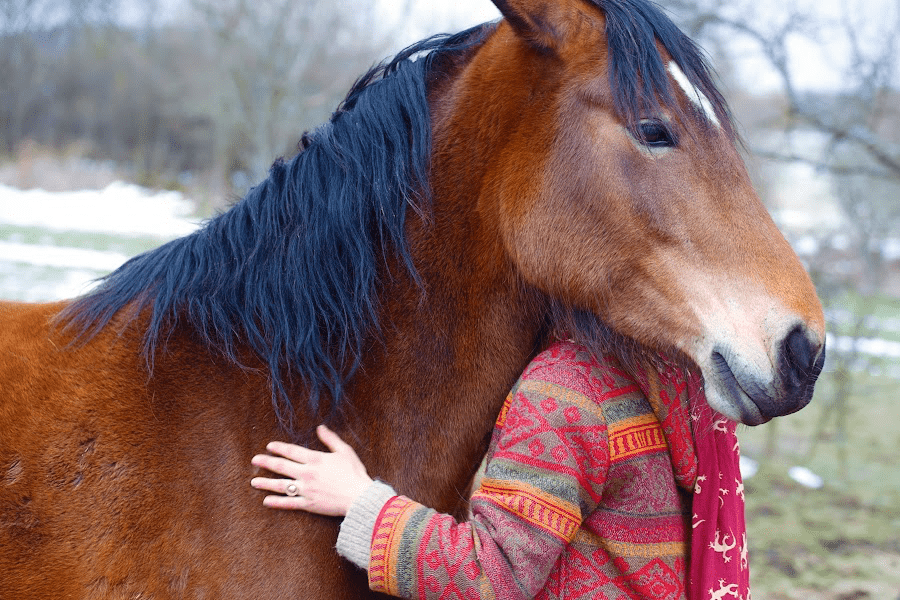
[/et_pb_text][et_pb_testimonial quote_icon=”off” _builder_version=”4.27.6″ _module_preset=”default” global_colors_info=”{}”]At its core, equine-assisted therapy (you’ll sometimes see it called EFP, EAL, or equine-assisted psychotherapy) is exactly what it sounds like: structured, professionally guided interactions between people and horses designed to support emotional, mental, and sometimes physical healing. It’s not about riding (though it can be, depending on the program). More often, it’s about: grooming. leading, observing. simply being with the horse… All with a trained facilitator helping guide the experience.[/et_pb_testimonial][/et_pb_column][/et_pb_row][et_pb_row column_structure=”1_5,3_5,1_5″ _builder_version=”4.27.6″ _module_preset=”default” global_colors_info=”{}”][et_pb_column type=”1_5″ _builder_version=”4.27.6″ _module_preset=”default” global_colors_info=”{}”][/et_pb_column][et_pb_column type=”3_5″ _builder_version=”4.27.6″ _module_preset=”default” global_colors_info=”{}”][et_pb_text _builder_version=”4.27.6″ _module_preset=”default” text_font=”|600|||||||” text_font_size=”23px” text_line_height=”1.9em” global_colors_info=”{}”][/et_pb_text][/et_pb_column][et_pb_column type=”1_5″ _builder_version=”4.27.6″ _module_preset=”default” global_colors_info=”{}”][/et_pb_column][/et_pb_row][et_pb_row _builder_version=”4.27.6″ _module_preset=”default” global_colors_info=”{}”][et_pb_column type=”4_4″ _builder_version=”4.27.6″ _module_preset=”default” global_colors_info=”{}”][et_pb_text _builder_version=”4.27.6″ _module_preset=”default” global_colors_info=”{}”]And here’s the important part: the horse isn’t a prop in the process—he or she is an active participant.
So why horses?
[/et_pb_text][et_pb_testimonial quote_icon=”off” _builder_version=”4.27.6″ _module_preset=”default” global_colors_info=”{}”]Horses are incredibly perceptive animals.
They respond to body language, energy, and emotion in a way that’s immediate and honest. There’s no filtering, no pretending, no social masking.
That matters more than you might think.
For someone dealing with anxiety, trauma, grief, or stress, being around a horse can gently interrupt the constant noise in their head and bring them back into the present moment.
And that’s not just a nice idea—it’s something researchers are actively studying.
[/et_pb_testimonial][/et_pb_column][/et_pb_row][et_pb_row column_structure=”1_5,3_5,1_5″ _builder_version=”4.27.6″ _module_preset=”default” global_colors_info=”{}”][et_pb_column type=”1_5″ _builder_version=”4.27.6″ _module_preset=”default” global_colors_info=”{}”][/et_pb_column][et_pb_column type=”3_5″ _builder_version=”4.27.6″ _module_preset=”default” global_colors_info=”{}”][et_pb_text _builder_version=”4.27.6″ _module_preset=”default” text_font=”|600|||||||” text_font_size=”23px” text_line_height=”1.9em” global_colors_info=”{}”]Horses respond to what’s real. They don’t interpret your words. They don’t respond to what you say you’re feeling. They respond to what you are feeling. That kind of honest, immediate feedback is something many people—especially those dealing with trauma, anxiety, or emotional overwhelm—don’t often experience. And that’s where things start to shift.[/et_pb_text][/et_pb_column][et_pb_column type=”1_5″ _builder_version=”4.27.6″ _module_preset=”default” global_colors_info=”{}”][/et_pb_column][/et_pb_row][et_pb_row _builder_version=”4.27.6″ _module_preset=”default” global_colors_info=”{}”][et_pb_column type=”4_4″ _builder_version=”4.27.6″ _module_preset=”default” global_colors_info=”{}”][et_pb_text _builder_version=”4.27.6″ _module_preset=”default” global_colors_info=”{}”]
What research is showing
[/et_pb_text][et_pb_testimonial quote_icon=”off” _builder_version=”4.27.6″ _module_preset=”default” global_colors_info=”{}”]One of the more important pieces of research in this space comes from Tufts University, where researchers studied the impact of equine-facilitated psychotherapy on youth experiencing post-traumatic stress.
In the study, participants between the ages of 10 and 18 took part in a structured program involving regular, guided interaction with horses over a period of several weeks. Their outcomes were then compared with a group receiving more traditional, office-based therapy.
What researchers found was meaningful.
Participants in the equine-assisted program experienced clear reductions in symptoms associated with post-traumatic stress, including improvements in emotional regulation and overall wellbeing.
At the same time, the comparison group receiving traditional therapy also showed improvement—which is important context.
Because what this study suggests is not that equine therapy replaces traditional approaches, but that it can stand alongside them as a legitimate and effective option.
If you’d like to explore the study itself, you can read it here.
[/et_pb_testimonial][/et_pb_column][/et_pb_row][et_pb_row column_structure=”1_5,3_5,1_5″ _builder_version=”4.27.6″ _module_preset=”default” global_colors_info=”{}”][et_pb_column type=”1_5″ _builder_version=”4.27.6″ _module_preset=”default” global_colors_info=”{}”][/et_pb_column][et_pb_column type=”3_5″ _builder_version=”4.27.6″ _module_preset=”default” global_colors_info=”{}”][et_pb_text _builder_version=”4.27.6″ _module_preset=”default” text_font=”|600|||||||” text_font_size=”23px” text_line_height=”1.9em” global_colors_info=”{}”]There is a definite shift from something that’s often dismissed as anecdotal… to something that is being studied, measured, and taken seriously.[/et_pb_text][/et_pb_column][et_pb_column type=”1_5″ _builder_version=”4.27.6″ _module_preset=”default” global_colors_info=”{}”][/et_pb_column][/et_pb_row][et_pb_row _builder_version=”4.27.6″ _module_preset=”default” global_colors_info=”{}”][et_pb_column type=”4_4″ _builder_version=”4.27.6″ _module_preset=”default” global_colors_info=”{}”][et_pb_text _builder_version=”4.27.6″ _module_preset=”default” global_colors_info=”{}”]
It’s not just the activity – it’s the connection
[/et_pb_text][et_pb_testimonial quote_icon=”off” _builder_version=”4.27.6″ _module_preset=”default” global_colors_info=”{}”]One of the more interesting aspects of this research is that it didn’t just look at symptom reduction.
It also explored the role of the relationship between the participant and the horse.
What emerged is something many people intuitively understand, the connection matters.
[/et_pb_testimonial][/et_pb_column][/et_pb_row][et_pb_row column_structure=”1_5,3_5,1_5″ _builder_version=”4.27.6″ _module_preset=”default” global_colors_info=”{}”][et_pb_column type=”1_5″ _builder_version=”4.27.6″ _module_preset=”default” global_colors_info=”{}”][/et_pb_column][et_pb_column type=”3_5″ _builder_version=”4.27.6″ _module_preset=”default” global_colors_info=”{}”][et_pb_text _builder_version=”4.27.6″ _module_preset=”default” text_font=”|600|||||||” text_font_size=”23px” text_line_height=”1.9em” global_colors_info=”{}”]Working with a horse isn’t passive. It requires awareness, presence, and trust—and those are often the very things that trauma disrupts. In that sense, the interaction itself becomes part of the therapeutic process.[/et_pb_text][/et_pb_column][et_pb_column type=”1_5″ _builder_version=”4.27.6″ _module_preset=”default” global_colors_info=”{}”][/et_pb_column][/et_pb_row][et_pb_row _builder_version=”4.27.6″ _module_preset=”default” global_colors_info=”{}”][et_pb_column type=”4_4″ _builder_version=”4.27.6″ _module_preset=”default” global_colors_info=”{}”][et_pb_text _builder_version=”4.27.6″ _module_preset=”default” global_colors_info=”{}”]
Researchers are continuing to explore
[/et_pb_text][et_pb_testimonial quote_icon=”off” _builder_version=”4.27.6″ _module_preset=”default” global_colors_info=”{}”]This area of research is still evolving, but it’s expanding quickly.
Broader studies on human–animal interaction have shown that working with animals can support emotional regulation, stress reduction, and overall mental health.
https://www.ncbi.nlm.nih.gov/pmc/articles/PMC6616398
Recent work is also beginning to look at what’s happening on a physiological level—how interactions with horses may influence the nervous system, stress response, and even heart rate variability.
[/et_pb_testimonial][/et_pb_column][/et_pb_row][et_pb_row column_structure=”1_5,3_5,1_5″ _builder_version=”4.27.6″ _module_preset=”default” global_colors_info=”{}”][et_pb_column type=”1_5″ _builder_version=”4.27.6″ _module_preset=”default” global_colors_info=”{}”][/et_pb_column][et_pb_column type=”3_5″ _builder_version=”4.27.6″ _module_preset=”default” global_colors_info=”{}”][et_pb_text _builder_version=”4.27.6″ _module_preset=”default” text_font=”|600|||||||” text_font_size=”23px” text_line_height=”1.9em” global_colors_info=”{}”]So what began as something people simply felt is now something science is now starting to understand more clearly—both emotionally and biologically.[/et_pb_text][/et_pb_column][et_pb_column type=”1_5″ _builder_version=”4.27.6″ _module_preset=”default” global_colors_info=”{}”][/et_pb_column][/et_pb_row][/et_pb_section][et_pb_section fb_built=”1″ _builder_version=”4.27.6″ _module_preset=”default” background_color=”#f5f5f7″ animation_style=”fade” global_module=”110″ global_colors_info=”{}”][et_pb_row _builder_version=”4.27.6″ _module_preset=”default” global_colors_info=”{}”][et_pb_column type=”4_4″ _builder_version=”4.27.6″ _module_preset=”default” global_colors_info=”{}”][et_pb_image src=”https://healingtogetherwithhorses.org/wp-content/uploads/2026/04/Maamawi-noojimoiwewin-healing-together.png” title_text=”Maamawi-noojimoiwewin-healing-together” url=”https://healingtogetherwithhorses.org” align=”center” _builder_version=”4.27.6″ _module_preset=”default” global_colors_info=”{}”][/et_pb_image][/et_pb_column][/et_pb_row][et_pb_row _builder_version=”4.27.6″ _module_preset=”default” global_colors_info=”{}”][et_pb_column type=”4_4″ _builder_version=”4.27.6″ _module_preset=”default” global_colors_info=”{}”][et_pb_text _builder_version=”4.27.6″ _module_preset=”default” animation_style=”zoom” global_colors_info=”{}”]
We invite you to be part of what happens next
[/et_pb_text][et_pb_text _builder_version=”4.27.6″ _module_preset=”default” animation_style=”fade” global_colors_info=”{}”]If this resonates with you — if you believe in creating a place where horses are safe, where people can connect with horses and nature, and where something thoughtful and compassionate is possible — we invite you to be part of continuing to build Maamawi-Noojimoiwewin Centre.
[/et_pb_text][et_pb_button button_text=”DONATE” button_alignment=”center” _builder_version=”4.27.6″ _module_preset=”default” custom_button=”on” button_border_radius=”33px” button_font=”|700|||||||” animation_style=”bounce” global_colors_info=”{}”][/et_pb_button][et_pb_image src=”https://healingtogetherwithhorses.org/wp-content/uploads/2026/05/thank-you.png” _builder_version=”4.27.6″ _module_preset=”default” align=”center” title_text=”thank you” hover_enabled=”0″ sticky_enabled=”0″][/et_pb_image][/et_pb_column][/et_pb_row][/et_pb_section][et_pb_section fb_built=”1″ _builder_version=”4.27.6″ _module_preset=”default” global_module=”204″ global_colors_info=”{}”][et_pb_row _builder_version=”4.27.6″ _module_preset=”default” global_colors_info=”{}”][et_pb_column type=”4_4″ _builder_version=”4.27.6″ _module_preset=”default” global_colors_info=”{}”][et_pb_text _builder_version=”4.27.6″ _module_preset=”default” global_colors_info=”{}”]Recent blog posts
[/et_pb_text][et_pb_blog fullwidth=”off” posts_number=”3″ include_categories=”all” use_manual_excerpt=”off” show_more=”on” show_author=”off” show_date=”off” show_categories=”off” show_excerpt=”off” _builder_version=”4.27.6″ _module_preset=”default” global_colors_info=”{}”][/et_pb_blog][/et_pb_column][/et_pb_row][/et_pb_section][et_pb_section fb_built=”1″ _builder_version=”4.27.6″ _module_preset=”default” animation_style=”fade” global_module=”111″ global_colors_info=”{}”][et_pb_row column_structure=”1_3,2_3″ _builder_version=”4.27.6″ _module_preset=”default” global_colors_info=”{}”][et_pb_column type=”1_3″ _builder_version=”4.27.6″ _module_preset=”default” global_colors_info=”{}”][et_pb_image src=”https://healingtogetherwithhorses.org/wp-content/uploads/2026/04/Maamawi-Noojimoiwewin-Ojibwe-healing-together.png” title_text=”Maamawi-Noojimoiwewin-Ojibwe-healing-together” align=”center” _builder_version=”4.27.6″ _module_preset=”default” animation_style=”slide” animation_direction=”left” global_colors_info=”{}”][/et_pb_image][/et_pb_column][et_pb_column type=”2_3″ _builder_version=”4.27.6″ _module_preset=”default” global_colors_info=”{}”][et_pb_divider show_divider=”off” _builder_version=”4.27.6″ _module_preset=”default” global_colors_info=”{}”][/et_pb_divider][et_pb_testimonial quote_icon=”off” _builder_version=”4.27.6″ _module_preset=”default” background_color=”#f5f5f7″ animation_style=”slide” animation_direction=”right” border_radii=”off|14px|14px|14px|14px” global_colors_info=”{}”]Maamawi-Noojimoiwewin is Ojibwe and means “healing together”.
It speaks to the connection between people, horses, and the land — and the journey we all share.
The name was gifted by the mother and grandmother of Kara Perrault-Barry (Garden River First Nation), who created our logo.
[/et_pb_testimonial][/et_pb_column][/et_pb_row][/et_pb_section]